Culture
Every year on March 20, World Happiness Day draws global attention to the annual happiness rankings. Denmark consistently ranks among the world’s happiest countries and while high levels of social trust, quality of life and the concept of hygge are often highlighted as key contributors, everyday habits also play an important role. Danish Wheelness™ highlights cycling as one of the defining habits that supports daily wellbeing in Denmark.
The Danish Route to Wellness
Cycling’s connection to happiness is well documented, thanks to its many physical and mental health benefits. Just one hour of cycling per week can help prevent major lifestyle diseases, while cycling just under four miles a day is enough to meet national physical activity recommendations. Regular cycling has also been linked to a 28% lower risk of premature death.
Cyclists also report higher levels of social connection, wellbeing and mental resilience compared to car users. According to MD and Professor of Integrative Medicine Bente Klarlund Pedersen, cycling has clear physiological effects on mental health: “When you cycle and push the pedals, your muscles convert stress-related substances into a harmless form that cannot affect the brain. In that sense, cycling works like a natural antidepressant.”
These combined health benefits may help explain why cycling is closely linked to Denmark’s consistently high happiness rankings, says Meik Wiking, CEO of the Happiness Research Institute and author of The Little Book of Hygge and The Little Book of Lykke: “Danes do not bike because they are happy. They are happy because they bike.”
A Nation Built by Cycling
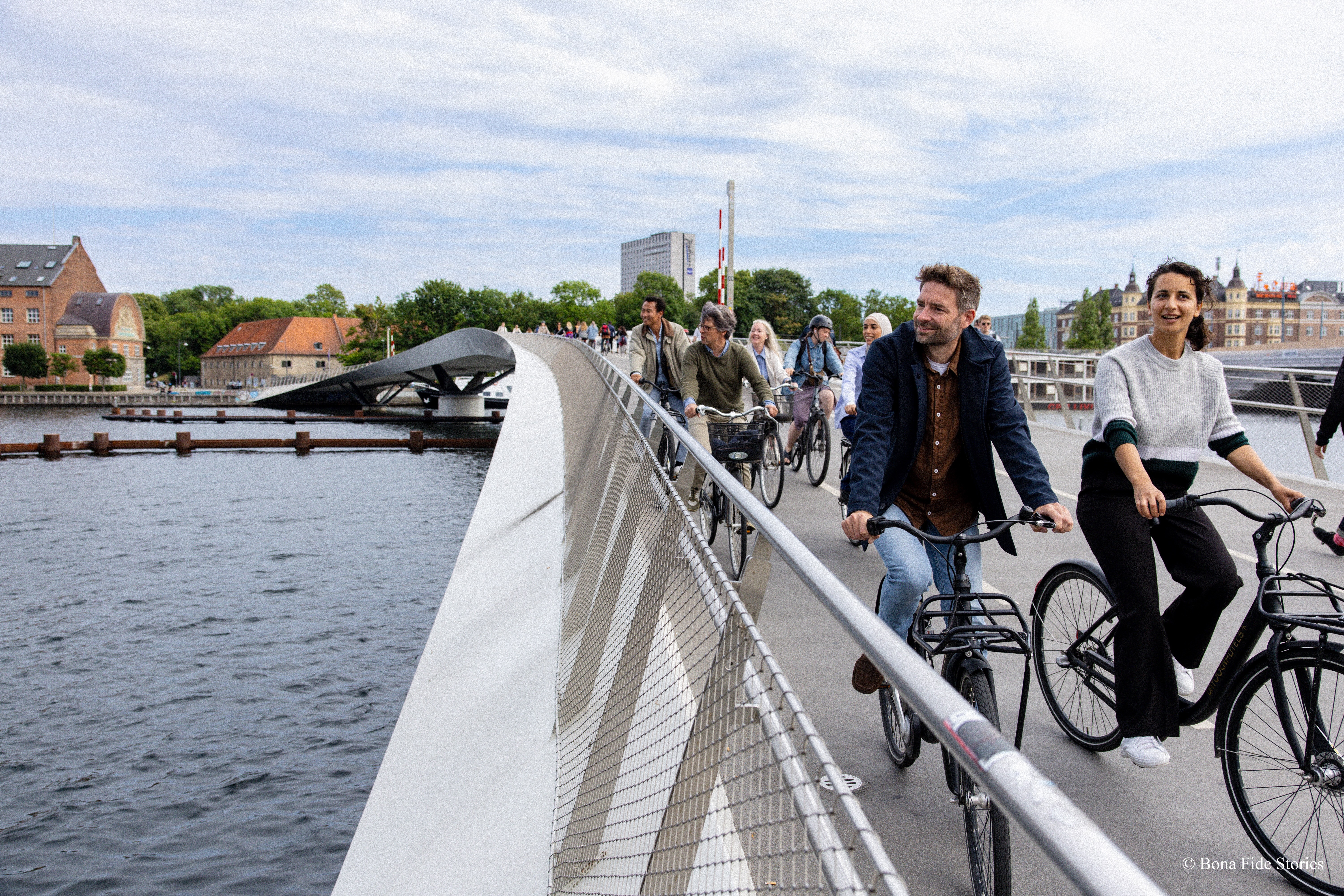
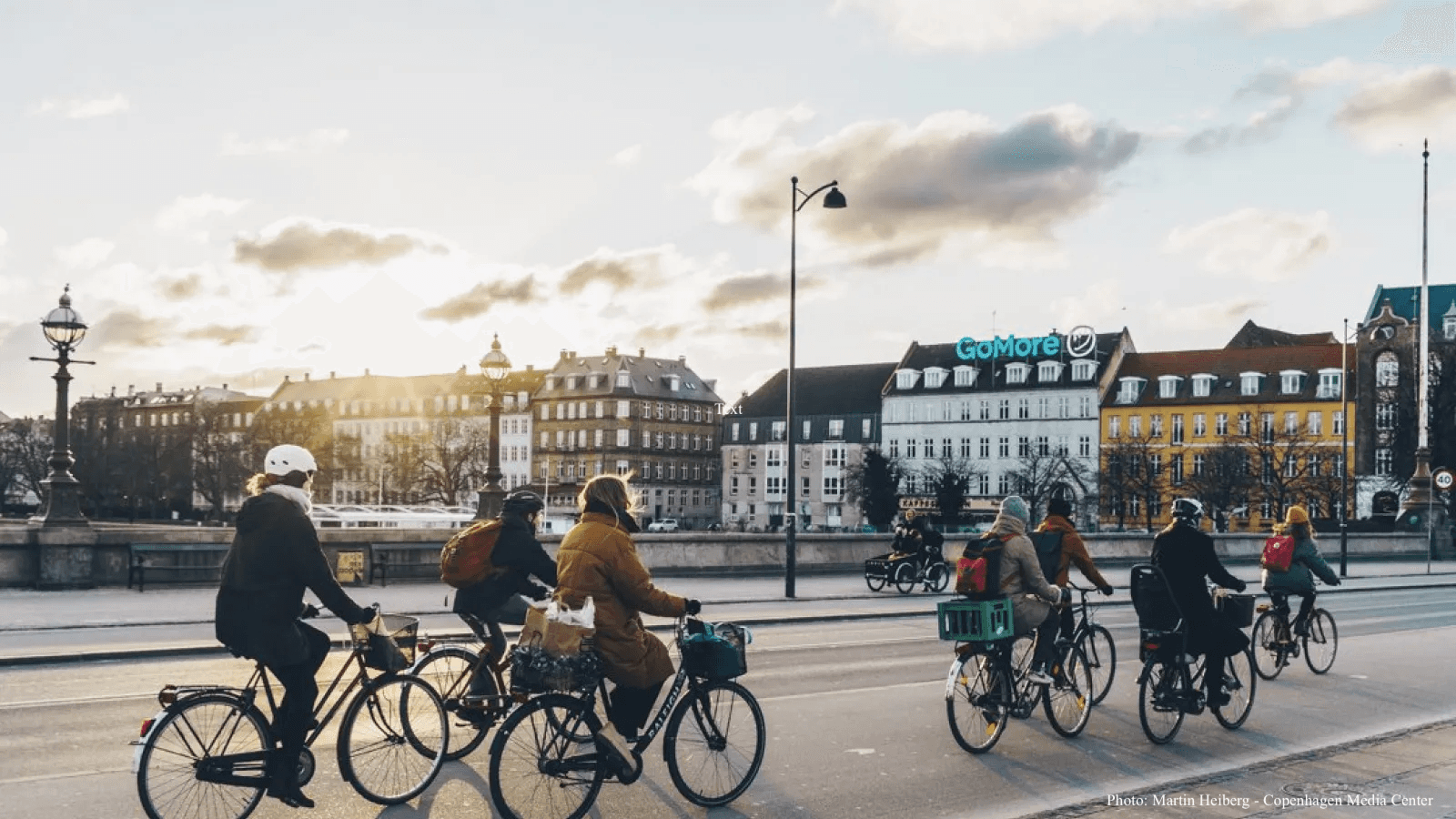
In Denmark, cycling is a natural part of everyday life - not just a leisure activity. People of all ages, income levels and regions use the bike as a practical means of transport. Children cycle to school, adults commute to work, and older generations stay active on two wheels. Every day, Danes make around 2.2 million bike trips and cycle nearly 5 million miles in total - equivalent to almost 200 journeys around the Earth.
This widespread cycling culture is supported by extensive bike infrastructure integrated into urban and regional planning, making cycling a safe and practical choice for daily transport. Cycling is so embedded in Danish society that it is even included in national reimbursement schemes for business travel, allowing individuals to claim compensation when using their own bicycle for work-related journeys.
Fact and figures
Regular cycling is associated with a 28% lower risk of premature death.
Every day, Danes make around 2.2 million bike trips, cycling nearly 5 million miles (8 million km) in total.
Cycling 4 miles (≈ 6 km) per day is enough to meet national physical activity recommendations.
Cycling also creates significant societal value: each mile cycled generates substantial public health benefits, amounting to approximately DKK 18 billion annually (≈ $2.8 billion / £2.1 billion / €2.4 billion).